
Hajj and Umrah bring together millions of Muslims from over 150 nations, each with distinct culinary preferences, dietary habits, and staple traditions. Creating menus that satisfy international palates while providing the sustained energy needed for demanding pilgrimage rites requires deep culinary understanding and operational expertise.
The Physiological Demands of Pilgrimage
The rites of Hajj involve considerable physical exertion, including Tawaf, Sa’i, and walking between the holy sites of Mina, Arafat, and Muzdalifah under high heat. Menus must deliver tailored nutritional balance:
- Complex Carbohydrates: Basmati rice, flatbreads, and whole grains provide steady glycogen replenishment throughout the day.
- Lean Protein Sources: Fresh halal lamb, beef, and skinless poultry cooked in mild broths maintain muscle recovery without causing digestive heaviness.
- Electrolytes and Hydration: Incorporating fresh fruits with high water content (watermelon, oranges, dates), along with packaged buttermilk (Laban) and mineral hydration packs, prevents dehydration and heat exhaustion.
Regional Cuisines for International Delegations
Food brings comfort to pilgrims thousands of miles from home. Successful catering operators develop authentic recipe profiles tailored to specific cultural delegations:
- South Asian Delegations (Pakistan, India, Bangladesh): Fragrant biryanis, slow-cooked lentils (Daal), gently spiced chicken and mutton gravies, accompanied by fresh warm bread and cooling raita.
- Southeast Asian Delegations (Indonesia, Malaysia): Steamed white rice, savory chicken rendang, stir-fried vegetables with mild seasoning, boiled eggs, and sambal on the side for optional heat.
- Arab and North African Delegations: Kabsa, Mandi, tender braised lamb shanks, grilled meats, fattoush, hummus, and warm spiced stews.
- Turkish and Central Asian Delegations: Pilaf rice with vermicelli, mild grilled köfte, hearty lentil soups, fresh yogurt, and light salads.
Buffets vs. Individually Sealed Meal Trays
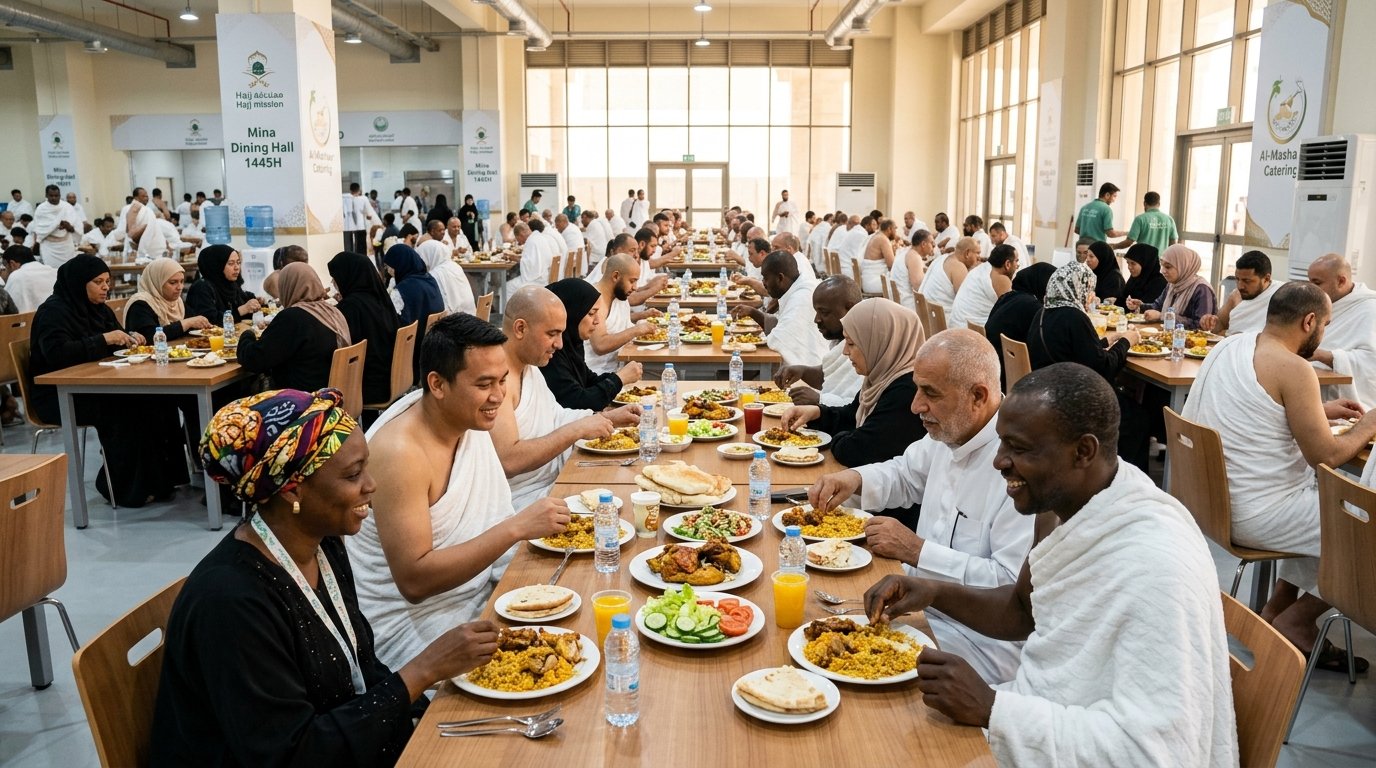
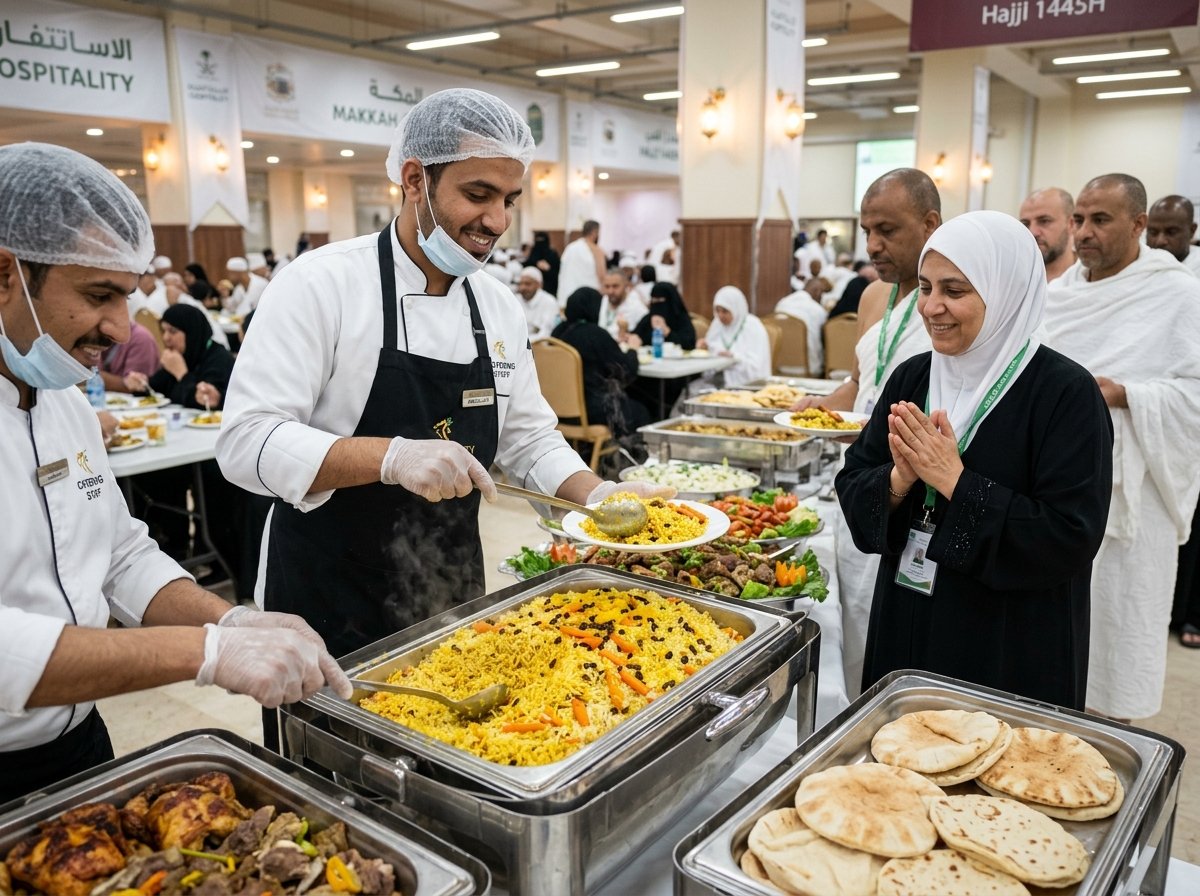
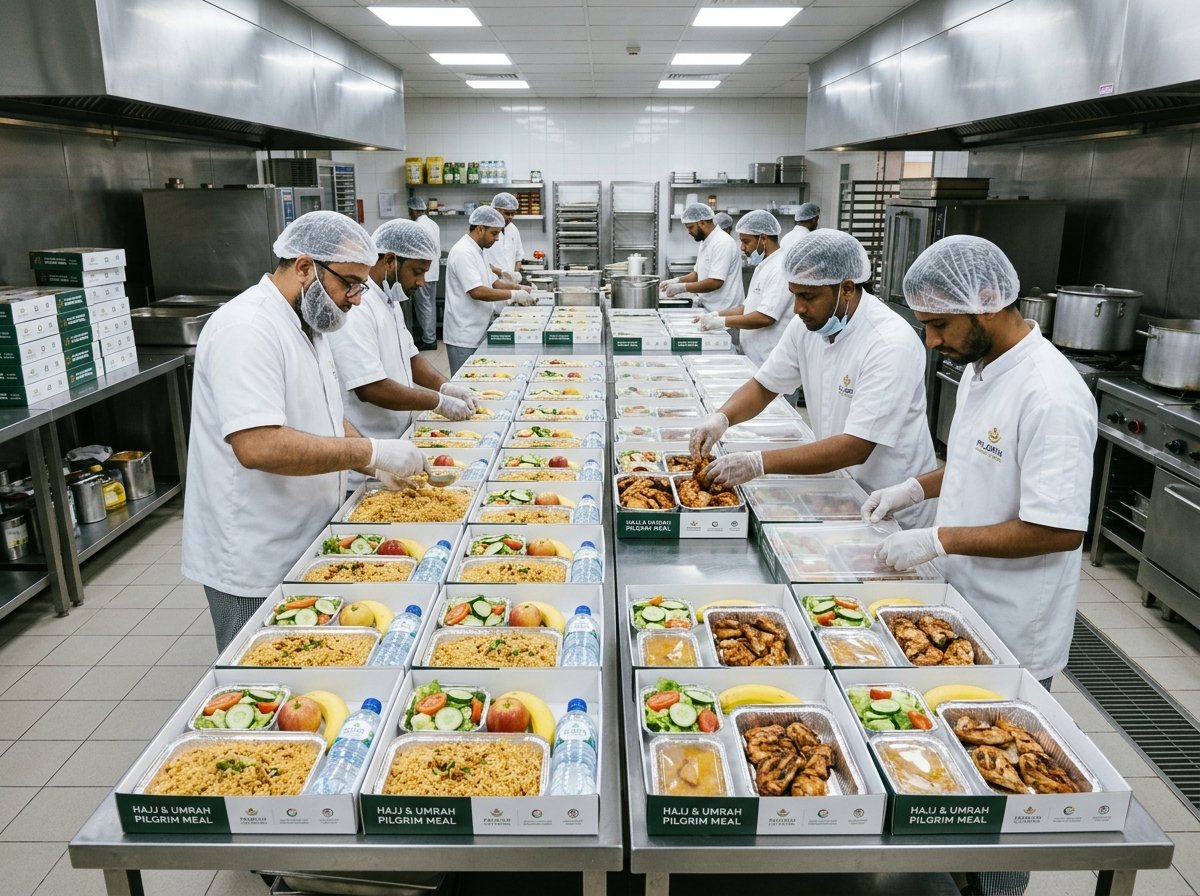
Depending on the campaign itinerary and lodging type, operators balance buffet setups with individually boxed meals. Hotel dining halls and Mina VIP tents benefit from hot buffet spreads with live carveries and continuous beverage stations. During transit days, individually packaged hermetically sealed meal boxes ensure timely, hygienic distribution without crowding.
Partnering with Experienced Pilgrimage Caterers
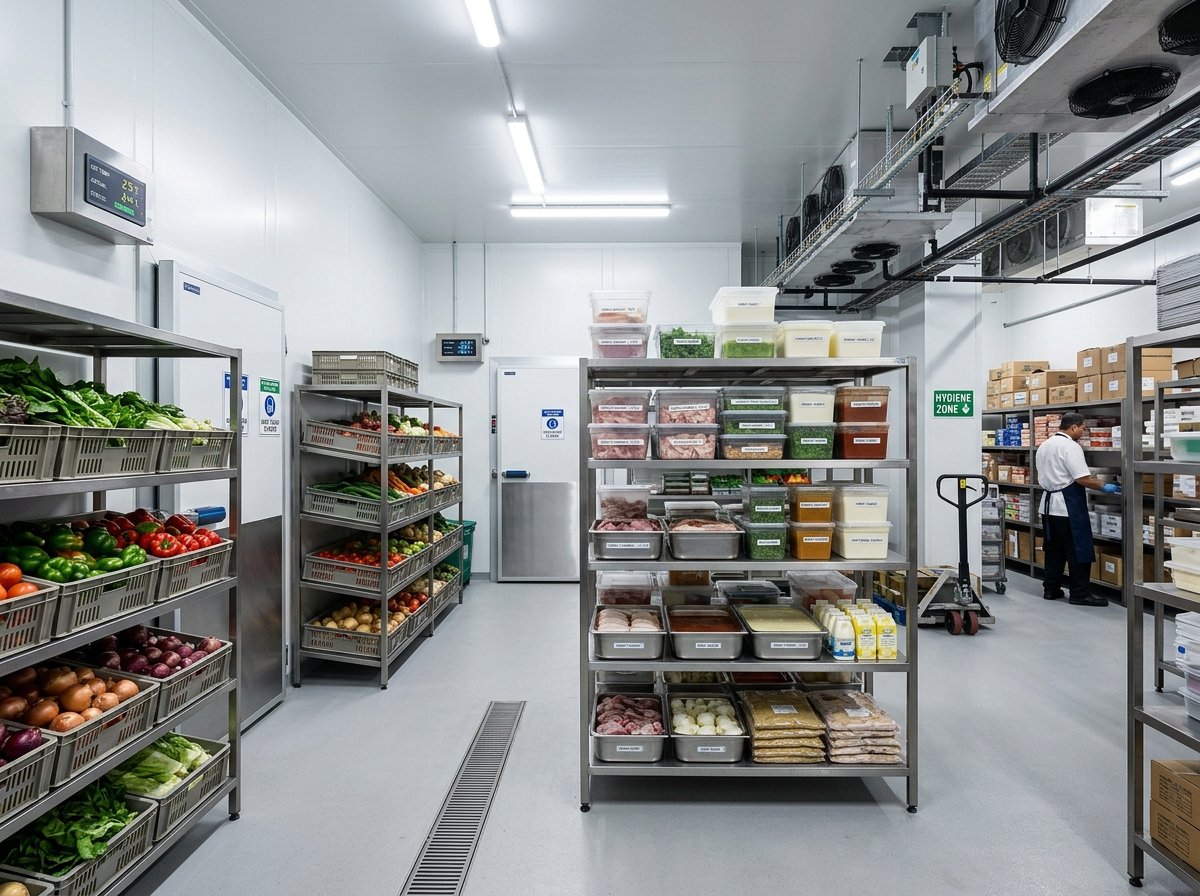
Al Rifada wal Wefada develops customized catering packages for Hajj tour operators, delegations, and hotel groups. Our experienced chefs prepare authentic dishes daily in high-capacity central kitchens, honoring the tastes and traditions of every guest.